Chronic pain is exhausting. Not just the sensation itself, but the constant vigilance, the fear of flare-ups, the way it shrinks your world. Pain medication has its place, but many people seek complementary approaches, especially when medications bring side effects or limitations.
Hypnosis for pain management has strong research support—more than many other complementary approaches. AI-guided hypnosis makes these techniques accessible for daily practice.
Understanding Chronic Pain
Chronic pain is different from acute pain:
Acute pain: A signal that something is wrong, serving a protective function.
Chronic pain: When pain persists beyond normal healing time—often three months or more—the nervous system itself has changed. Pain can occur even after tissues have healed.
This doesn’t mean the pain isn’t real. Chronic pain is absolutely real. But it means that addressing it requires working with the nervous system as well as the body.
How Hypnosis Helps Pain
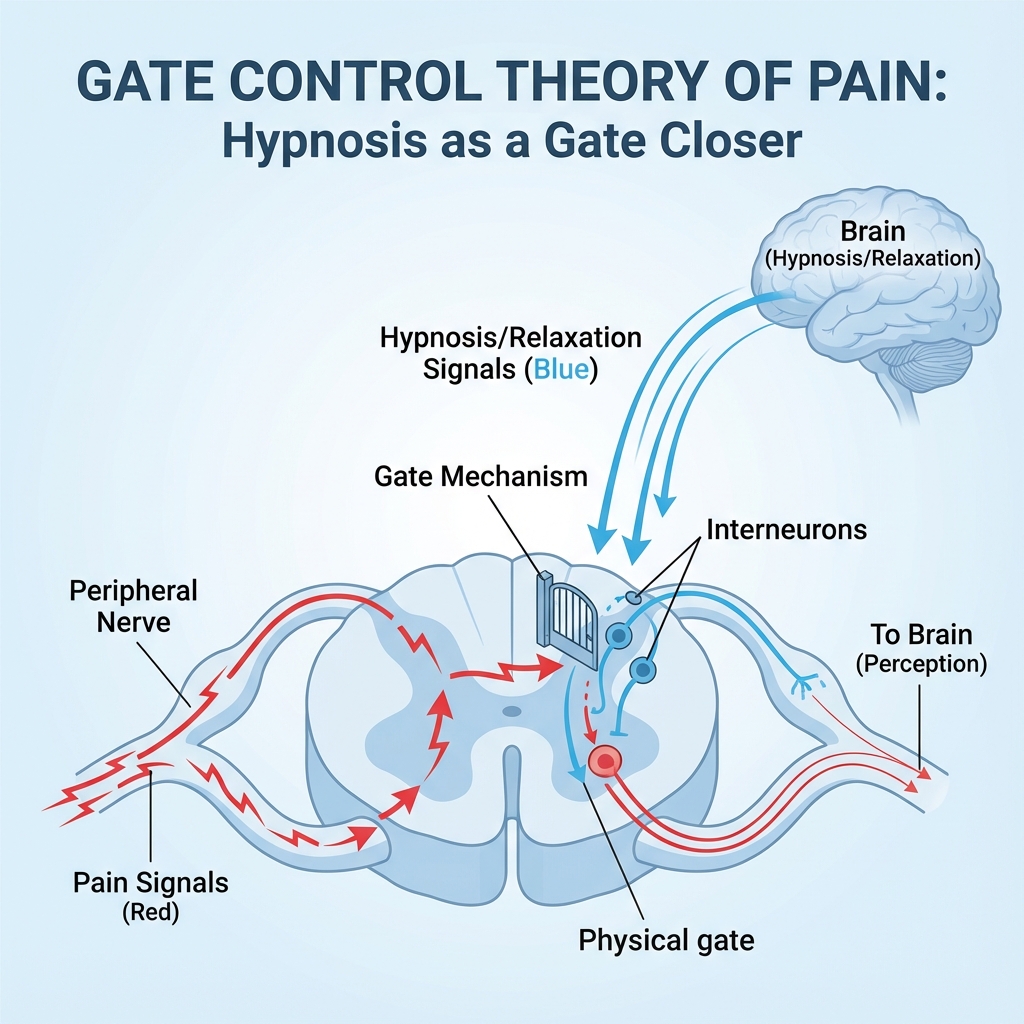
Hypnosis approaches pain through multiple pathways:
Changing Pain Perception
“Focus on the area of discomfort. Now imagine a dial that controls the sensation’s intensity, numbered 1 to 10. Watch the dial—and begin to turn it down. Slowly, from wherever it is, moving lower. Watch the number decrease. Feel the sensation responding.”
Research shows hypnotic suggestions can actually change how the brain processes pain signals.
Shifting Attention
Attention modulates pain. What you focus on expands:
“Pain takes up 100% of your attention right now. Let’s experiment. Shift your attention to the sensations in your left earlobe. What do you feel there? Now your big toe. The temperature of the air on your skin. Pain still exists, but attention has moved—and pain requires attention to dominate.”
Reducing Suffering (Distinct from Sensation)
Pain has two components: the sensation, and the suffering—the emotional response, the fear, the anticipatory anxiety. Hypnosis addresses both:
“The sensation may continue. What we can change is your response to it. Watch the struggle with the sensation soften. You don’t have to fight it. Let it exist without resistance. This is acceptance, not defeat.”
Accessing the Subconscious
Pain patterns become entrenched in the subconscious:
“Your nervous system has learned to signal pain. It can learn something different. We’re reprogramming the response, training new patterns at the level where pain actually lives.”
The Evidence for Hypnosis and Pain
Research supports hypnosis for chronic pain:
- Meta-analyses show moderate-to-large effects for pain reduction
- Hypnosis is recommended by several medical associations for pain management
- Brain imaging shows hypnosis changes pain-related brain activity
- Effects often persist beyond the practice session
- Works for various pain types: back pain, headaches, fibromyalgia, arthritis, cancer pain
This is not fringe therapy—it’s increasingly mainstream.
Important Considerations
Medical Supervision
AI hypnosis is a complement to medical care, not a replacement. If you have chronic pain:
- Continue working with your healthcare providers
- Don’t stop medications without medical guidance
- Report any changes in pain patterns to your doctor
- Get new or changing pain evaluated
Pain as Information
Pain sometimes communicates real problems. Before using hypnosis to reduce pain, ensure you understand what’s causing it. Reducing pain from an untreated condition could be dangerous.
Not for Everyone
Some people respond to hypnosis more than others. Response is partially trainable, but if hypnosis isn’t helping after consistent practice, other approaches may work better for you.
Techniques for Chronic Pain
The Dial Technique
Visualising pain as a dial you can adjust:
“See the dial set at 7. Watch as you turn it down… 6… 5… 4. Each number means less intensity. You have control over this dial.”
Glove Anaesthesia
Building numbness and transferring it:
“Imagine your hand is becoming numb—as if placed in ice, but without discomfort. Just growing number and number. Now place that numb hand over the area of pain. Watch the numbness transfer.”
Dissociation
Creating distance from the sensation:
“Step outside your body for a moment. Observe it from a distance. From here, the pain looks different—smaller, less consuming. You are not your pain. You can observe it without being overwhelmed by it.”
Transformation Imagery
Changing pain’s form:
“Give the pain a shape and color. Maybe it’s red and jagged. Watch it transform—the color shifting to blue, then to white. The shape softening, becoming rounded. As its form changes, so does the sensation.”
Time Distortion
Altering perception of duration:
“The minutes of pain feel like they stretch forever. What if they contracted instead? A minute becomes a second. An hour becomes five minutes. Time is flexible in hypnosis.”
Building a Practice for Pain Management
Daily Sessions
Consistency matters. 15-20 minutes daily is more effective than occasional longer sessions.
Preventive Practice
Don’t wait for pain to be at its worst:
“When pain is lower, that’s when to practice. You’re building skills for when you need them, depositing in the bank before you need to withdraw.”
Flare-Up Response
Have a specific practice ready for bad days:
“When flare-ups happen, you know exactly what to do. The technique is rehearsed, ready. You’re not scrambling—you’re responding with a practiced tool.”
Tracking
Monitor pain levels before and after practice, and over weeks of regular practice. This provides objective data on what’s working.
Managing Expectations
Hypnosis for chronic pain:
- Can: Reduce pain intensity, reduce medication needs, improve daily functioning, reduce pain-related anxiety
- Cannot: Work for everyone, guarantee pain-free days, eliminate need for medical care, cure underlying conditions
Success looks like: better days more often, reduced suffering even when pain is present, greater sense of control, improved quality of life.
Common Questions
Will hypnosis make me ignore pain I should pay attention to?
No. You remain aware of your body. Hypnosis addresses the suffering and excessive focus on chronic pain—not your ability to notice new or changed sensations.
How quickly does it work?
Many people notice some effect in the first sessions. Meaningful, lasting change typically requires weeks of consistent practice.
Can I reduce my pain medications?
Possibly, over time and with medical supervision. Never change medications without consulting your doctor.
What if I’m skeptical?
Hypnosis works for skeptics too—you don’t need to believe for it to help. Just be willing to follow the guidance.
Is this treatment or cure?
Management, not cure. Hypnosis provides tools for living better with chronic pain, not necessarily eliminating it entirely.
The Bottom Line
Chronic pain is real, but the degree to which it controls your life is partially modifiable. Hypnosis offers evidence-based techniques for reducing pain perception, redirecting attention, and decreasing the suffering that accompanies sensation. AI guidance makes daily practice accessible. This isn’t about ignoring pain or pretending it doesn’t exist—it’s about developing a different relationship with it. Many people find that relationship change alone significantly improves quality of life.