You spend your days caring for others, often at their most vulnerable moments. You witness suffering, sometimes death. You make difficult decisions under pressure. And then you go home and try to be normal—because who cares for the carers?
Compassion fatigue is real. So is burnout, vicarious trauma, and the peculiar isolation of carrying experiences you can’t easily share. AI meditation offers tools specifically relevant to healthcare—processing what you witness, maintaining compassion without depletion, and finding moments of peace in demanding environments.
The Reality of Healthcare Work
Healthcare professionals face unique stressors:
- Witness to trauma: Seeing suffering, death, and difficult situations regularly
- Responsibility weight: Life-and-death decisions, fear of errors
- Emotional labour: Being compassionate even when exhausted
- Physical demands: Long shifts, irregular hours, physical fatigue
- System frustrations: Bureaucracy, understaffing, moral distress
- Boundary challenges: Work following you home, difficulty switching off
These combine into high rates of burnout, depression, and compassion fatigue among healthcare workers.
Understanding Compassion Fatigue
Compassion fatigue isn’t weakness—it’s the cost of caring. Symptoms include:
- Emotional exhaustion and numbness
- Reduced empathy (secondary traumatic stress)
- Physical symptoms: headaches, digestive issues, fatigue
- Cynicism about patients or the profession
- Intrusive thoughts about difficult cases
- Sleep disturbances
- Difficulty experiencing joy
AI meditation addresses these symptoms while you continue the work you do.
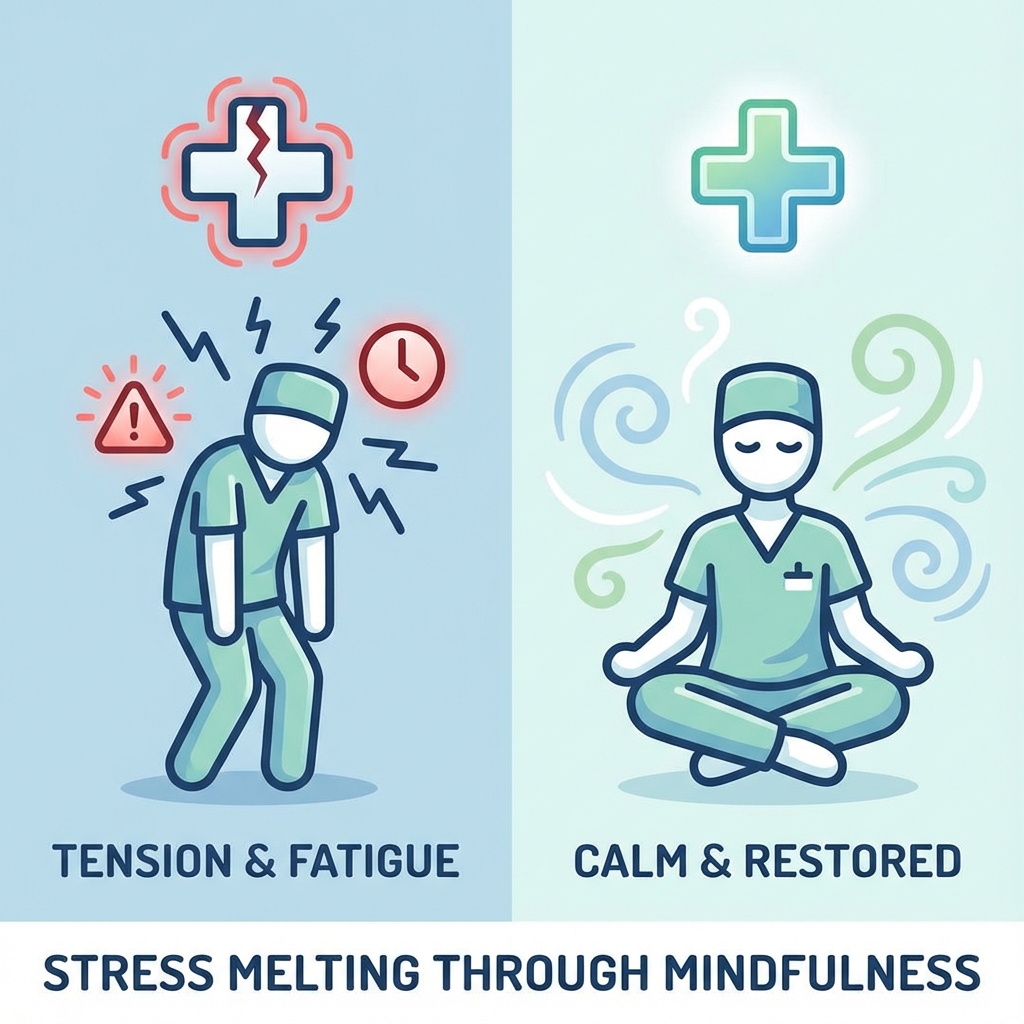
How AI Meditation Helps Healthcare Workers
Processing Difficult Shifts
After a hard shift, before the next obligation:
“What happened today? Let it surface—not to relive it, but to acknowledge it. The patient you lost. The family you had to tell. The moment when there wasn’t enough time or resources. You feel these things because you’re human and you care. Let the feelings exist without having to fix them.”
Maintaining Compassion Without Depletion
Sustainable compassion requires boundaries:
“Your compassion is a resource, not unlimited. You can care deeply while also protecting yourself. Imagine compassion flowing through you to patients—but not from you, as if you were the source. Draw from something larger. You’re a channel, not the reservoir.”
Switching Off After Shifts
The hardest transition for many healthcare workers:
“You’re leaving work. The patients are being cared for by others now. For the next hours, you’re off. Not because the work doesn’t matter—because sustainability matters. Your best care tomorrow requires rest today. Give yourself permission to be off-duty.”
Finding Calm in Chaos
For moments during shifts when stress peaks:
“One breath. That’s all you need right now. When you have more time, you’ll process. For now, one conscious breath centers you. You can do this.”
Shift-Compatible Practices
Pre-Shift Centering (5 minutes)
Before entering the hospital or clinic:
- Grounding in the present moment
- Setting intention for the shift
- Connecting to why you do this work
“Today I will care for people as best I can. I will not be perfect. I will do what I can with what I have. That is enough.”
Micro-Breaks During Shift
Between patients, in stairwells, during bathroom breaks:
- 3 conscious breaths
- Quick body scan for tension
- Momentary grounding
No formal meditation needed—just brief moments of presence.
Post-Shift Processing (10-15 minutes)
Before going home or to the next thing:
- Acknowledge what was hard
- Release what you can’t carry
- Transition toward non-work life
Days Off: Deeper Restoration
Longer sessions on days off:
- Working with accumulated stress
- Self-compassion practice
- Joy cultivation (often neglected in healthcare workers)
Addressing Specific Healthcare Challenges
After a Patient Death
“You lost someone today. No matter how expected, it carries weight. Allow yourself to feel what you feel—grief, relief, numbness, whatever arises is valid. Death is part of this work, but it’s never routine. You cared for this person. That mattered.”
After Making a Mistake
“You made an error. The replay won’t change it. What’s needed now? Has it been reported? Can it be corrected? If you’ve done what you can, then what remains is processing. You are not your worst moment. Errors don’t erase your competence or caring.”
Dealing with Difficult Patients or Families
“Some people are hard to care for. Their anger, their demands, their behavior. Remember that illness often brings out the worst in people. Your care doesn’t require you to absorb their negativity. You can serve without taking on their distress.”
System Frustrations
“The system is imperfect. You can’t fix it alone. What you can control is your response within it. Frustration is valid—let it exist without fighting it or surrendering to it.”
Building Resilience Over Time
Regular Practice
- Daily practice when possible
- Even 5-10 minutes makes a difference
- Consistency matters more than duration
Peer Support
- Sharing experiences with colleagues who understand
- Normalising the emotional cost of care
- Breaking the culture of “just deal with it”
Self-Care Basics
Meditation works better when supported by:
- Adequate sleep (when possible)
- Physical movement
- Connection outside of work
- Activities that bring joy
When More Support Is Needed
AI meditation helps with normal healthcare stress, but please seek additional support if:
- Depression interferes with daily life
- You’re using alcohol or substances to cope
- Suicidal thoughts arise
- PTSD symptoms persist after traumatic events
- You’re making more errors due to burnout
Speaking with a therapist who understands healthcare is valuable. Employee assistance programs, peer support programs, and mental health services are not admissions of failure—they’re professional resources.
What Sustainable Healthcare Practice Looks Like
Long-term healthcare careers require sustainability:
- Compassion that doesn’t deplete
- Boundaries that protect without disconnecting
- Processing rather than suppressing difficult experiences
- Finding meaning without martyrdom
- Rest as part of the job, not a luxury
AI meditation is one tool in building this sustainable practice.
Frequently Asked Questions
I’m too exhausted to meditate after a shift.
Then don’t. The practice is for you, not another obligation. On exhaustion days, rest. On okay days, practice.
Isn’t taking time for myself selfish when patients need care?
Your capacity to care depends on your wellness. This is resource management, not selfishness.
What about night shifts and irregular schedules?
Practice when you can. Brief sessions adapt to any schedule. There’s no “right time” to meditate.
How do I explain meditation to colleagues who might judge it?
“Stress management” and “mental wellness practice” are neutral terms. But increasingly, healthcare culture recognises these practices as professional tools.
Can this help with the moral distress of under-resourced care?
Meditation can help you process moral distress, but it can’t solve systemic problems. Advocacy, policy change, and professional organising are also needed.
A Note on Institutional Responsibility
While AI meditation helps individuals, remember: the responsibility for healthcare worker wellness isn’t only personal. Institutions should provide adequate staffing, support systems, and work environments that don’t require heroic individual coping. Your self-care practice is valuable, but it shouldn’t substitute for systemic change.
The Bottom Line
Healthcare workers give endlessly to others, often at great personal cost. AI meditation offers a tool—not to make the work easy (it never will be), but to process what you witness, protect your capacity for compassion, and find moments of peace in demanding lives. You matter. Your wellness matters. And your ability to sustainably care for others depends on caring for yourself.