Close your eyes and imagine a place of complete peace. What does it look like? Sound like? Feel like? This simple exercise—visualisation—is one of the most powerful tools in meditation, and AI guidance can help you access and develop it more richly than generic recordings ever could.
What Is Guided Visualisation?
Visualisation (or guided imagery) is the practice of creating or visiting mental images to achieve psychological effects:
- Relaxation: Imagining peaceful places calms the nervous system
- Healing: Visualising health and recovery supports physical wellness
- Performance: Mental rehearsal improves actual performance
- Self-exploration: Symbolic journeys reveal inner wisdom
- Emotional processing: Safe mental spaces for difficult work
AI guidance makes visualisation more accessible, especially for those who think “I can’t visualise.”
Why AI-Guided Visualisation Works Better
Generic visualisation recordings say things like “imagine a beach.” But what if beaches don’t relax you? AI adapts:
- Personal preferences: You mention you love forests; the visualisation becomes forest
- Adaptive pacing: Moving slower or faster based on your needs
- Responsive guidance: If you mention anxiety, the imagery addresses it
- Building over time: Your mental sanctuary develops and deepens with practice
Creating Your Mental Sanctuary
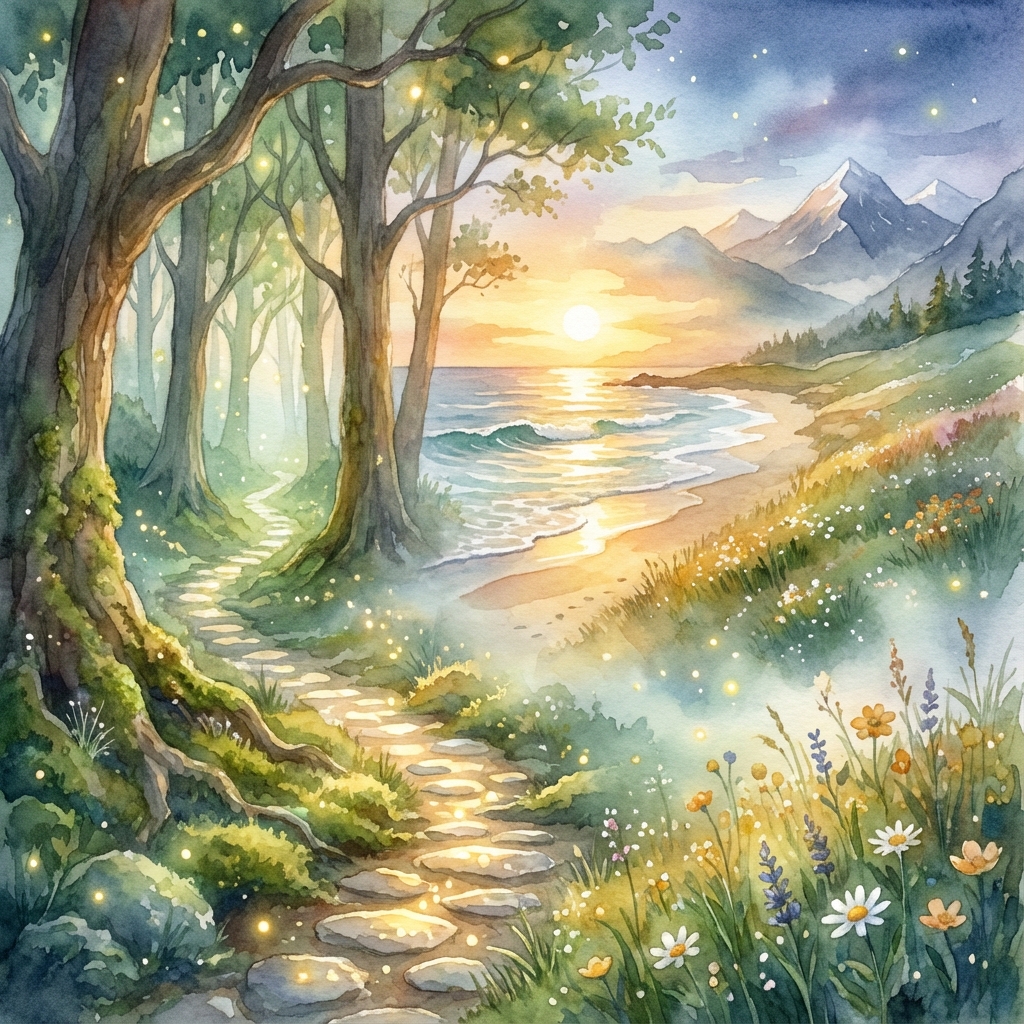
Your mental sanctuary is a personalised place of safety and restoration. Let’s build one.
Step 1: Choose the Setting
AI guidance helps you discover what resonates:
“We’re going to find your sanctuary. I’ll suggest different environments. Notice which one your body responds to. A beach with gentle waves… A forest with soft light filtering through trees… A cozy cabin in the mountains… A meadow of wildflowers… Which feels most like peace to you?”
Step 2: Develop Sensory Details
The power of visualisation is in specificity:
“You’re in your place. Look around. What colors do you see? What’s the light like? Now add sounds—what do you hear? Feel the ground beneath you. What’s the temperature? A gentle breeze? Let this place become real in your mind.”
Step 3: Add Personal Elements
Making it uniquely yours:
“What would make this place feel even more like home? Maybe a comfortable seat where you can rest. Perhaps a stream or fountain nearby. Add whatever elements make this your perfect sanctuary.”
Step 4: Practice Returning
The more you visit, the easier access becomes:
“You can return here anytime. This place exists in your mind, always available. The more you visit, the more real and accessible it becomes. When you need peace, close your eyes and you’re here.”
Types of AI-Guided Visualisation
Relaxation Visualisation
Pure calm and restoration:
“You’re descending a staircase, each step taking you deeper into relaxation. With each step, tension melts away. Ten… nine… eight… deeper and calmer… seven… six… settling into peace…”
Healing Visualisation
Supporting physical wellness:
“Imagine healing light entering your body with each breath. It flows to wherever needs attention, bringing warmth and restoration. See your body’s natural healing processes activated and strengthened.”
Performance Visualisation
Mental rehearsal for success:
“See yourself in the situation you’re preparing for. Watch yourself performing exactly as you want to. Notice your calm confidence. Feel it in your body. You’re doing this—seeing it, feeling it, becoming it.”
Problem-Solving Visualisation
Accessing deeper wisdom:
“Imagine you have access to a wise advisor—it might be a person, a figure, or just a voice. Ask the question that’s troubling you. Listen for an answer. What wisdom arises from within?”
Emotional Processing Visualisation
Working with feelings safely:
“Give this emotion a form. What does it look like? A color? A shape? An object? Now you can see it outside yourself, work with it, understand it. What does it want you to know?”
The “I Can’t Visualise” Problem
Many people believe they can’t visualise. Usually this means they expect movie-quality mental movies. The reality:
- Knowing is enough: If you know what your bedroom looks like, you can visualise. You don’t need to “see” it vividly.
- Other senses work too: Some people hear, feel, or sense rather than see
- It develops with practice: Visualisation strengthens like any skill
- Partial is fine: Even vague impressions produce benefits
AI guidance helps by:
- Reducing pressure around visualisation
- Offering multiple sensory channels
- Accepting whatever experience arises
Practical Visualisation Exercises
The 5-Minute Sanctuary Visit
Quick stress relief:
- Close eyes
- Take three breaths
- Enter your sanctuary
- Rest there briefly
- Return refreshed
The Pre-Event Rehearsal
Before any challenging situation:
- Visualise yourself succeeding
- Feel the confidence
- Anchor that state
- Carry it into reality
The Body Scan with Healing Light
For physical wellness:
- Scan through your body
- Wherever tension or discomfort exists
- Imagine healing light or warmth
- Watch it restore and release
The Worry Release
For anxious thoughts:
- Place the worry in a container in your mind
- Watch the container shrink or float away
- Return to your sanctuary
- Trust that the worry can wait
Building Your Visualisation Practice
Week 1: Establish the Sanctuary
- Daily visits to your mental sanctuary
- Add details each time
- Make it increasingly vivid and real
Week 2: Expand Techniques
- Try different types of visualisation
- Notice which resonate most
- Develop your personal preferences
Week 3: Apply to Life
- Use visualisation before challenging situations
- Apply healing visualisation to physical concerns
- Access sanctuary whenever stressed
Ongoing: Deepen and Explore
- The sanctuary continues developing
- Increase visualisation complexity
- Trust your inner imagery more fully
The Neuroscience of Visualisation
Research shows that visualisation produces real effects:
- Brain activation: Imagining movement activates motor regions
- Nervous system response: Visualising calm produces calm
- Performance improvement: Athletes who visualise alongside physical practice improve more than physical practice alone
- Immune effects: Preliminary research suggests visualisation may support immune function
Your brain doesn’t fully distinguish between vivid imagination and physical experience—which is what makes visualisation powerful.
Common Questions
What if my visualisations turn negative?
You’re in control. If imagery becomes uncomfortable:
- Change the scene
- Open your eyes briefly
- Return to your sanctuary
- Work with a therapist if it persists
How long should I practice?
Even brief visualisation helps. 5-10 minutes is effective; longer allows more depth.
Can I visualise anything I want?
Yes, though programming positive states works better than visualising negative outcomes. Focus on what you want, not what you fear.
Is this the same as hypnosis?
Visualisation and hypnosis overlap significantly. Hypnosis typically includes induction and suggestion; visualisation is often simpler. Both use the power of imagination.
Will this work for athletic performance?
Yes. Sports psychology has used visualisation for decades. AI guidance can help athletes develop personalised mental rehearsal practices.
The Bottom Line
Your imagination is a powerful tool for change—for relaxation, healing, performance, and self-discovery. AI-guided visualisation makes this tool more accessible, more personalised, and more powerful. Your mental sanctuary awaits. All you need to do is close your eyes and step inside.