You know you’re capable. Objectively, you know you can do the thing.
But when the moment comes — the interview, the presentation, the difficult conversation — that knowing evaporates. Your voice tightens. Your mind blanks. You become a smaller, more hesitant version of yourself.
This gap between what you know and what you feel is where confidence fails.
And it’s exactly where hypnosis can help.
The confidence problem
Confidence isn’t just a mindset you can choose. It’s a deeper feeling — a sense of capability, worthiness, and ease that operates below conscious control.
You can tell yourself you’re confident. But if your subconscious believes otherwise, that self-talk gets overridden.
This is why affirmations often feel hollow. You say “I am confident” while another part of you quietly doubts.
True confidence is felt, not just thought. And feelings are shaped by the subconscious.
How hypnosis builds confidence
Hypnosis works at the subconscious level — exactly where lasting confidence must be installed.
Mental rehearsal
Athletes know this: vividly imagining successful performance improves actual performance. The brain processes imagined experiences similarly to real ones.
Hypnosis provides structured mental rehearsal:
- See yourself walking into the interview, calm and engaged
- Hear yourself speaking clearly, confidently
- Feel the settled ease of someone who knows they belong
Repeated rehearsal builds the internal experience of confidence. Your subconscious starts treating this confident self as familiar, possible, real.
Accessing past resources
You’ve had confident moments before. Times when you felt capable, spoke up, handled something well.
Hypnosis helps access these states vividly. You recall not just the memory but the feeling — the body sensations, the mental clarity, the ease.
These resourceful states can be linked to future challenges. An “anchor” is created: a cue that triggers the confident state when you need it.
Reframing limiting beliefs
Deep in the subconscious, limiting beliefs often lurk:
- “I’m not really good enough”
- “People can see through me”
- “If I speak up, I’ll be judged”
- “I’ll probably fail”
Hypnosis can surface and reframe these beliefs. In the relaxed hypnotic state, new perspectives can take root:
- “I have valuable things to contribute”
- “Others are focused on their own concerns, not evaluating me”
- “Speaking up serves the conversation”
- “Whatever happens, I can handle it”
Installing a confident identity
Beyond individual situations, hypnosis can work on identity level:
Who are you, at your core? Someone who shrinks or someone who shows up?
Hypnotic suggestion, vividly experienced, helps construct an identity as a confident person. Not arrogant — just solidly certain of your worth and capability.
This identity then shapes behaviour automatically. You start acting confident because that’s who you are now.
What AI personalisation adds
Generic confidence hypnosis exists. It can help. But your confidence challenges are specific.
Maybe it’s public speaking but not one-on-one conversations. Maybe it’s work situations but not social ones. Maybe it’s asking for what you want but not everyday interactions.
AI hypnosis learns your specific challenges:
- What situations trigger lack of confidence
- What you fear happening
- What “confident” would look like for you
The mental rehearsal then addresses your actual situations. The reframing targets your actual limiting beliefs. The identity work speaks to your specific growth edge.
Common confidence applications
AI hypnosis works for various confidence contexts:
Public speaking and presentations
- Rehearsing the specific presentation, feeling calm and present
- Reframing fear of judgment
- Accessing previous speaking successes
- Building comfort with visibility
Job interviews
- Visualising the interview going well
- Feeling deserving of the opportunity
- Handling difficult questions with poise
- Projecting competence without performing
Conversations and confrontations
- Speaking up when something matters
- Expressing disagreement without aggression
- Asking for what you need
- Holding healthy boundaries
Social confidence
- Feeling at ease in groups
- Initiating conversations
- Being comfortable with attention
- Not needing approval to feel okay
Dating and romantic contexts
- Being yourself rather than performing
- Handling rejection as information, not devastation
- Expressing interest without desperation
- Confident physical presence
How confidence develops with hypnosis
Confidence building through hypnosis follows a progression:
Early sessions: You experience the contrast between anxious default and hypnotic calm. This reveals that different states are possible.
After a few sessions: Mental rehearsals become more vivid. You might notice slightly less anticipatory dread before triggering situations.
Weeks in: Real-world situations start feeling slightly different. Not transformed, but shifted. More moments of feeling capable.
With consistent practice: Confident responses become more automatic. You might notice acting confidently before you consciously decided to.
Long-term: Confidence becomes more trait than state. Less something you have to cultivate and more something you simply are.
This is gradual. It requires consistent practice over weeks and months. But the change is real and lasting.
Practical use of AI hypnosis for confidence
Before specific events: The day before an interview, presentation, or challenging conversation, do a session focused on that event.
Regular practice: Beyond events, regular sessions build baseline confidence. Consistent practice compounds.
After setbacks: If something doesn’t go well, reframe the experience in session. Integrate rather than ruminate.
For identity work: Longer sessions focused on who you’re becoming. Less event-specific, more fundamental.
What confidence isn’t
A note on what hypnosis isn’t creating:
Not arrogance. Genuine confidence doesn’t require diminishing others. It’s secure, not defensive.
Not absence of doubt. Confident people have doubts too. They just don’t let doubt run the show.
Not performing. Authentic confidence isn’t acting confident. It’s actually feeling capable and at ease.
Not guaranteed success. Confidence improves performance but doesn’t ensure outcomes. You can be confident and still not get the job.
Hypnosis builds the internal sense of worth and capability. External results follow, but aren’t the direct target.
Combining with action
Hypnosis works best alongside action.
- Mental rehearsal prepares you, but real experiences build real confidence
- Taking action despite anxiety is essential
- Success accumulation provides evidence that updates beliefs
The pattern: hypnosis preparation → action → reflection → hypnosis integration → more action.
Each cycle builds confidence. Hypnosis accelerates but doesn’t replace the action requirement.
The compound effect of confidence work
Confidence is self-reinforcing. The more confident you feel, the better you perform. Better performance builds more confidence.
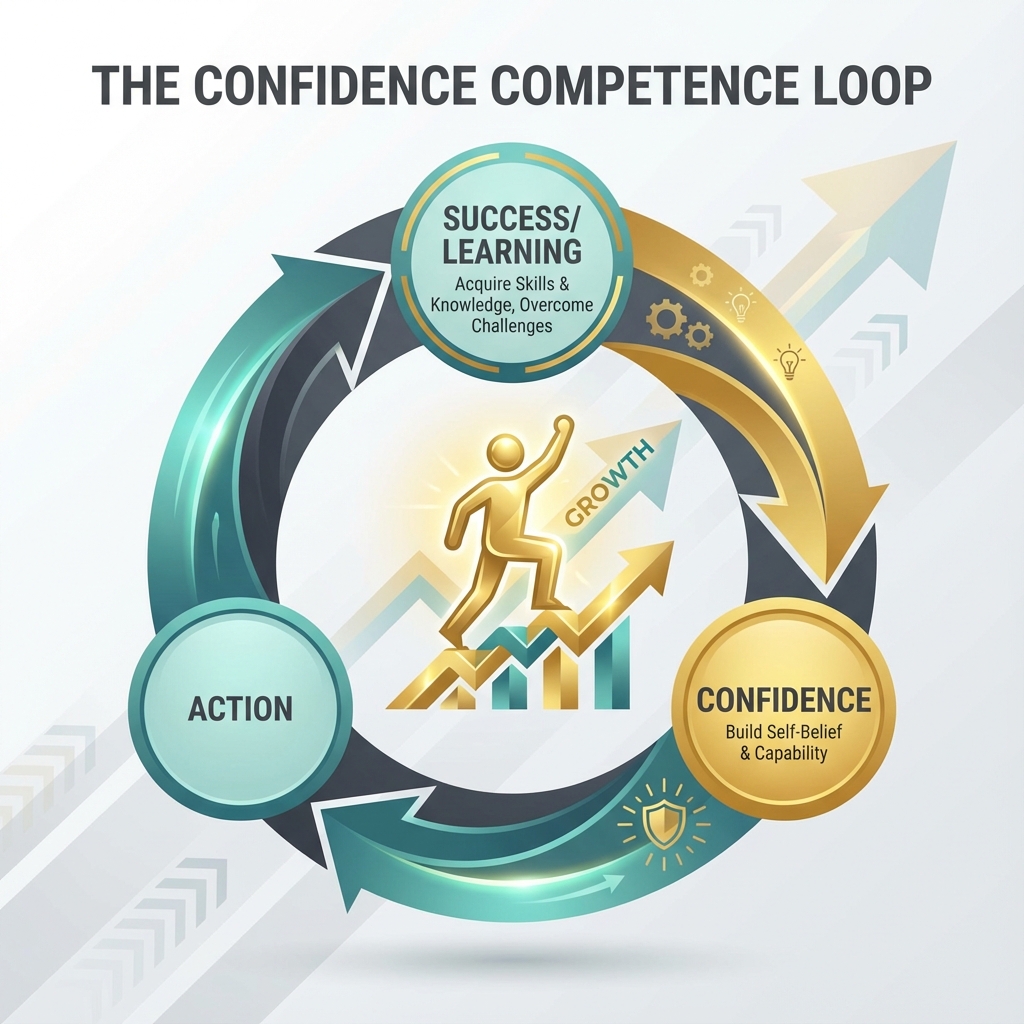
Hypnosis kickstarts this positive cycle. When you feel more confident (even slightly), you act more confidently, which generates better results, which provides real evidence for your confidence.
Over time, the cycle becomes self-sustaining. The hypnosis practice that started the cycle becomes maintenance rather than foundation.
The bottom line
Confidence isn’t something you either have or don’t. It’s trainable.
AI hypnosis provides one of the most direct paths:
- Rehearse confidence at the level where it’s felt
- Reframe the beliefs that undermine it
- Install a confident identity that expresses naturally
There’s work involved. Regular practice, actual exposure to challenges, honest confrontation with limiting beliefs.
But the reward is substantial: becoming someone who shows up fully, speaks clearly, acts from worth rather than fear.
That version of you is possible. Hypnosis helps you find them.
Ready to build lasting confidence? Get started with two free sessions per day — the first step toward becoming who you’re meant to be.