Cortisol is infamous as the “stress hormone”—but it’s actually essential to life. The problem isn’t cortisol itself; it’s chronically elevated cortisol from ongoing stress. Research increasingly links meditation practise to healthier cortisol patterns. Here’s what the science says and how AI meditation might help restore balance.
Understanding Cortisol
What Cortisol Does
Cortisol is produced by the adrenal glands and serves vital functions:
- Morning Awakening: Natural spike helps you wake up alert
- Energy Mobilisation: Releases glucose for acute energy needs
- Stress Response: Part of fight-or-flight activation
- Inflammation Regulation: Helps modulate immune function
You need cortisol. The issue is how much and when.
The Problem with Chronic Elevation
When stress is constant, cortisol stays high:
- Sleep Disruption: Elevated evening cortisol prevents restful sleep
- Weight Gain: Particularly abdominal fat
- Immune Suppression: Increased susceptibility to illness
- Cognitive Impairment: Memory and concentration issues
- Mood Disturbance: Anxiety, depression, irritability
- Metabolic Effects: Blood sugar dysregulation
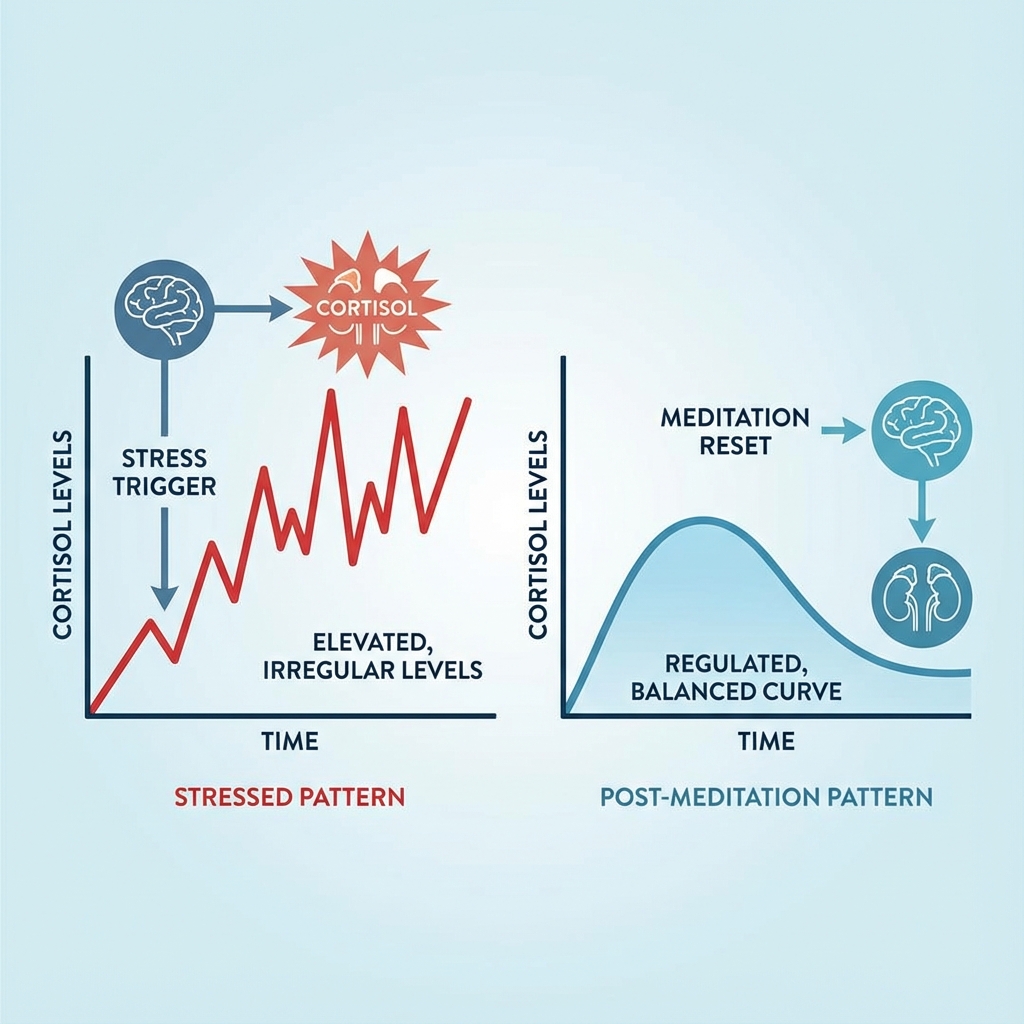
Healthy vs Unhealthy Patterns
Normal cortisol follows a pattern:
- High in morning (waking you up)
- Gradual decline through day
- Low at night (allowing sleep)
Chronic stress flattens or disrupts this pattern, with high evening cortisol and insufficient morning rise.
What Research Shows About Meditation
Acute Effects
Studies find cortisol decreases during and immediately after meditation:
- A single meditation session can measurably reduce cortisol
- The bigger the pre-session stress, the larger the reduction
- Effects are comparable to other relaxation techniques
Chronic Effects
Regular meditation practise shows:
- Lower baseline cortisol levels
- Healthier diurnal patterns (proper morning rise, evening decline)
- Reduced cortisol reactivity to stressors (smaller spikes when stressed)
- Faster recovery after stress events
Specific Study Examples
- 8-week MBSR programs reduce cortisol in stressed populations
- Long-term meditators have different cortisol patterns than non-meditators
- Work stress cortisol can be reduced with regular meditation breaks
How Meditation Affects Cortisol
Parasympathetic Activation
Meditation activates the rest-and-digest (parasympathetic) nervous system, which:
- Signals safety to the adrenal glands
- Reduces cortisol output
- Promotes recovery and restoration
HPA Axis Regulation
The hypothalamic-pituitary-adrenal axis controls cortisol. Chronic meditation appears to:
- Improve HPA axis regulation
- Reduce oversensitivity to stressors
- Restore healthy feedback mechanisms
Perception Change
Some cortisol effects come through changed perception:
- Less reactivity to neutral stimuli
- Reduced rumination and worry
- Events feel less threatening
What AI Meditation Offers
Consistency
Consistent practise matters more than occasional long sessions. AI meditation’s accessibility supports daily practise.
Personalisation
Some people respond better to different meditation styles. AI can adapt to find what most effectively activates your relaxation response.
Accessibility
Can’t get to a yoga studio or find a teacher? AI meditation is always available, supporting practise when stress is high.
Guidance
Guided meditation may produce larger cortisol reductions than solo practise, especially for beginners.
A Cortisol-Lowering Practice
Morning Practice
Morning meditation sets parasympathetic tone for the day:
“Before the demands begin, establish calm. Let this state be your baseline, not stress. From here, you meet whatever comes.”
Stress Response Practice
When you notice stress rising:
“Cortisol is flowing—that’s your body protecting you. But you’re safe now. Signal safety with deep breaths. Tell your adrenals: we’re okay.”
Evening Practice
Lowering evening cortisol improves sleep:
“The day is complete. Let the stress hormones subside. Your body knows how to wind down. Give it permission. Tomorrow needs you rested.”
Complementary Strategies
Meditation works alongside other cortisol-management practises:
Sleep Hygiene
Sleep deprivation raises cortisol. Good sleep allows proper patterns.
Exercise
Moderate exercise reduces chronic cortisol (though intense exercise acutely raises it).
Social Connection
Positive social interaction lowers cortisol. Isolation raises it.
Nature Exposure
Time in natural environments reduces stress hormones.
Nutrition
Caffeine, alcohol, and blood sugar swings all affect cortisol.
Measuring Your Progress
Subjective Signs of Lower Cortisol
- Sleeping better (especially falling asleep)
- Less afternoon energy crash
- Calmer response to daily stressors
- Better concentration and memory
- Improved mood stability
Formal Testing
Cortisol can be measured via blood, saliva, or hair. Testing is expensive and usually unnecessary unless investigating medical issues.
Frequently Asked Questions
How long until meditation lowers my cortisol?
Acute effects are immediate. Baseline changes emerge over weeks of regular practise.
Can cortisol get too low?
Yes, but meditation won’t cause this. It promotes healthy regulation, not elimination.
Should I get my cortisol tested?
For most people, symptoms and wellbeing are sufficient guides. Testing is useful if you suspect Cushing’s syndrome, Addison’s disease, or other medical conditions.
Does any meditation type work?
Various types have shown effects. The key is regular practise of whatever approach you’ll actually do.
Is one session enough?
One session helps acutely. Lasting pattern changes require consistent practise over time.
The Bottom Line
Cortisol isn’t the enemy—chronic stress that keeps cortisol elevated is. Regular meditation practise helps restore healthy cortisol patterns: proper morning rise, daytime decline, and low evening levels. This isn’t esoteric wellness claim; it’s measurable physiology confirmed by research. AI meditation makes consistent practise accessible, supporting the steady practise that produces these physiological benefits. Your stress response can be re-trained. Your hormones can rebalance. It takes practise—but the research says it works.