Heart rate variability—HRV—has become a popular health metric. Fitness trackers measure it; health apps track it; biohackers optimise for it. But what actually is HRV, why does it matter, and how does AI meditation affect it? Here’s the science behind this increasingly important marker.
What Is HRV?
The Basics
Your heart doesn’t beat at a perfectly steady rate. Between beats, the intervals vary slightly:
- Beat 1 to Beat 2: 0.85 seconds
- Beat 2 to Beat 3: 0.79 seconds
- Beat 3 to Beat 4: 0.88 seconds
This variation is heart rate variability.
Why Variation Is Good
Counter-intuitively, more variation is generally healthier. High HRV indicates:
- Flexible, responsive nervous system
- Ability to adapt to changing demands
- Recovery capacity
- Parasympathetic (rest) activity
Low HRV suggests:
- Chronic stress
- Exhaustion
- Inflammation
- Less adaptability
The Autonomic Connection
HRV reflects the balance between:
- Sympathetic nervous system: Fight-or-flight, accelerating heartbeat
- Parasympathetic nervous system: Rest-and-digest, slowing heartbeat
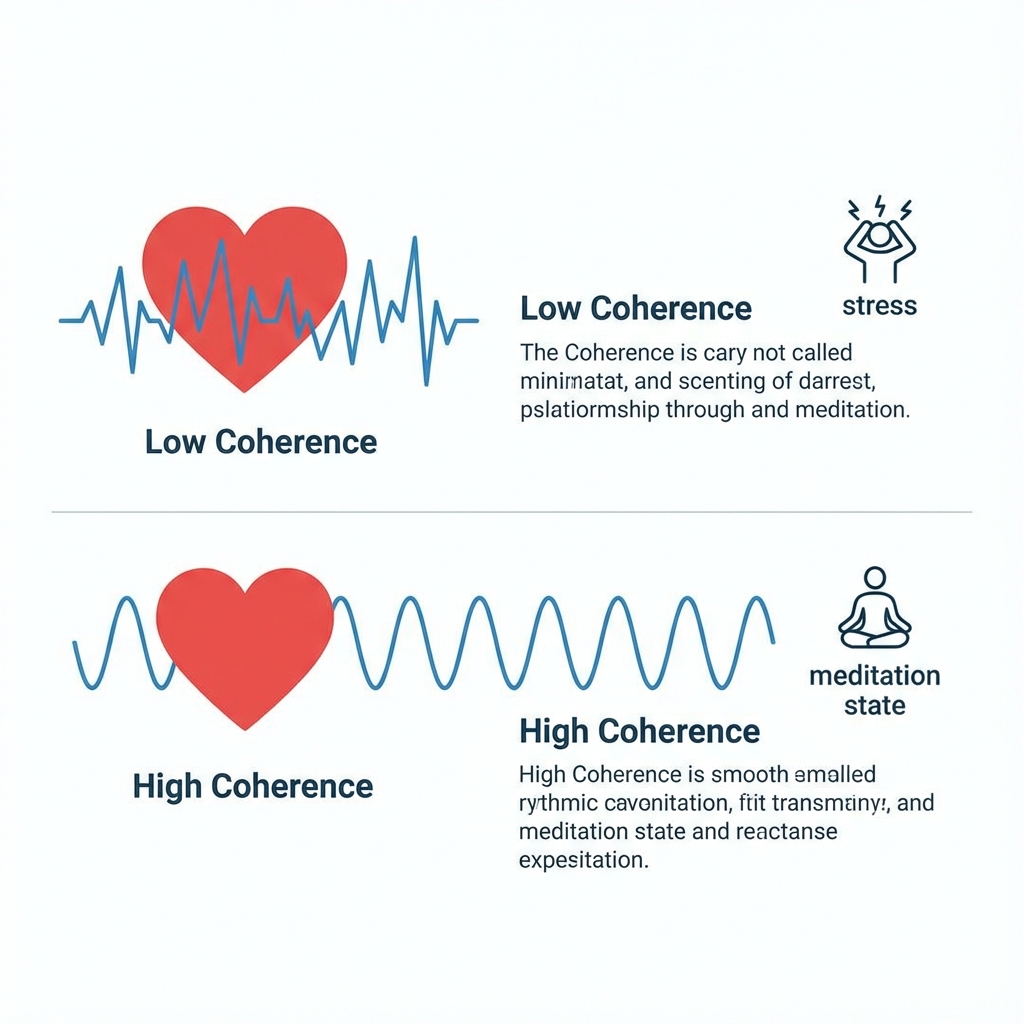
When both systems are active and balanced, HRV is high. When chronically stressed (sympathetic dominant), HRV drops.
Why HRV Matters
Stress and Recovery Indicator
HRV reveals your nervous system state:
- High morning HRV: Well-recovered, ready for demands
- Low morning HRV: Under-recovered, need easier day
Predictive Health Marker
Research links low HRV to:
- Heart disease risk
- Inflammation
- Depression
- Anxiety
- All-cause mortality
HRV isn’t just about today’s stress—it predicts long-term health.
Training Readiness
Athletes use HRV to guide training intensity. Same principle applies to life stress.
How Meditation Affects HRV
Acute Effects
During meditation:
- Parasympathetic activation increases
- Heart rate slows
- HRV typically rises
- Breathing becomes more rhythmic
These are temporary but reset your system.
Chronic Effects
Regular meditation over weeks and months:
- Baseline HRV increases
- More parasympathetic activity at rest
- Better stress recovery
- Improved autonomic flexibility
The Breathing Connection
Slow, rhythmic breathing—common in meditation—directly increases HRV:
- Resonance frequency breathing (~6 breaths/minute) maximises HRV
- This is why many guided meditations emphasise slow breathing
What Research Shows
Studies on meditation and HRV find:
- MBSR programs: Increase HRV over 8 weeks
- Regular meditators: Higher baseline HRV than non-meditators
- Single sessions: Acute HRV increase during and after practice
- Longer practise history: Greater HRV increases
The effect is consistent across meditation types, though breathwork-heavy practises may show larger effects.
Measuring Your HRV
At-Home Options
- Fitness trackers: Apple Watch, Oura Ring, Whoop, Garmin
- Chest straps: More accurate than wrist-based
- Apps: EliteHRV, HRV4Training with chest strap
When to Measure
- Morning: Most consistent baseline reading
- Same time daily: Consistency reveals patterns
- After waking, before getting up: Standardised conditions
What’s a Good Number?
HRV varies enormously by individual. Don’t compare to others. Track your own patterns:
- What’s your baseline?
- How does it change after stress/recovery?
- Is it trending up over weeks/months?
Using HRV to Guide Practice
Low HRV Day
If your morning HRV is low:
- Prioritise meditation that day
- Consider shorter, more frequent sessions
- Emphasise restorative, calming practice
High HRV Day
If HRV is high:
- You have capacity—can handle more demands
- Practice is still valuable for maintenance
- Can try more challenging meditation types
Tracking Pattern Changes
Over weeks, does meditation correlate with HRV trends? Many meditators see:
- Higher average HRV
- Faster recovery from stress dips
- More consistent readings
The Feedback Loop
Real-Time Biofeedback
Some apps display HRV during meditation, allowing you to:
- See immediate effects of techniques
- Learn what calms your nervous system fastest
- Develop interoceptive awareness
Post-Session Feedback
Checking HRV before and after sessions shows:
- Which meditation types affect you most
- Optimal session length
- Evidence of acute effects
Frequently Asked Questions
Does every meditation session increase HRV?
Usually, though effects vary. Consistently anxious or distracted sessions may show smaller effects.
How long until I see baseline improvements?
Expect weeks of consistent practise. HRV responds to cumulative stress and recovery, not single sessions alone.
Are some meditation types better for HRV?
Slow-breathing practises show larger acute effects. Any meditation type practiced consistently improves baseline HRV.
What if my HRV doesn’t improve?
Consider: consistency of practise, sleep quality, other stressors, measurement timing. HRV reflects overall life, not just meditation.
Is HRV tracking worth the effort?
For those interested in biometrics, it provides valuable feedback. But you can benefit from meditation without tracking.
The Bottom Line
Heart rate variability is a window into your nervous system’s state. Low HRV indicates stress and reduced adaptability; high HRV indicates resilience and recovery capacity. Meditation reliably increases HRV—both acutely during practise and chronically with consistent practise. For the quantified-self minded practitioner, tracking HRV provides objective evidence that meditation is changing your physiology in positive, measurable ways. The science is clear: regular meditation practise helps regulate the autonomic nervous system, and HRV is one way to see that regulation happening.