When people hear ”AI hypnosis,” they tend to imagine one of two things. Either it sounds like science fiction — some kind of mind control technology. Or it sounds suspect — how can a computer safely guide you into an altered state?
Both reactions are understandable. Hypnosis has a complicated reputation, and adding artificial intelligence to the mix doesn’t automatically inspire trust.
So let’s address the question directly: Is AI hypnosis safe?
The short answer is yes, for most people. But the longer answer involves understanding what hypnosis actually is, what AI hypnosis involves, and who should approach it with caution.
First: What actually happens during hypnosis
Many misconceptions about hypnosis safety stem from misunderstanding what hypnosis is.
Hypnosis is not:
- Mind control
- Sleep or unconsciousness
- Something that can be “done to you” without consent
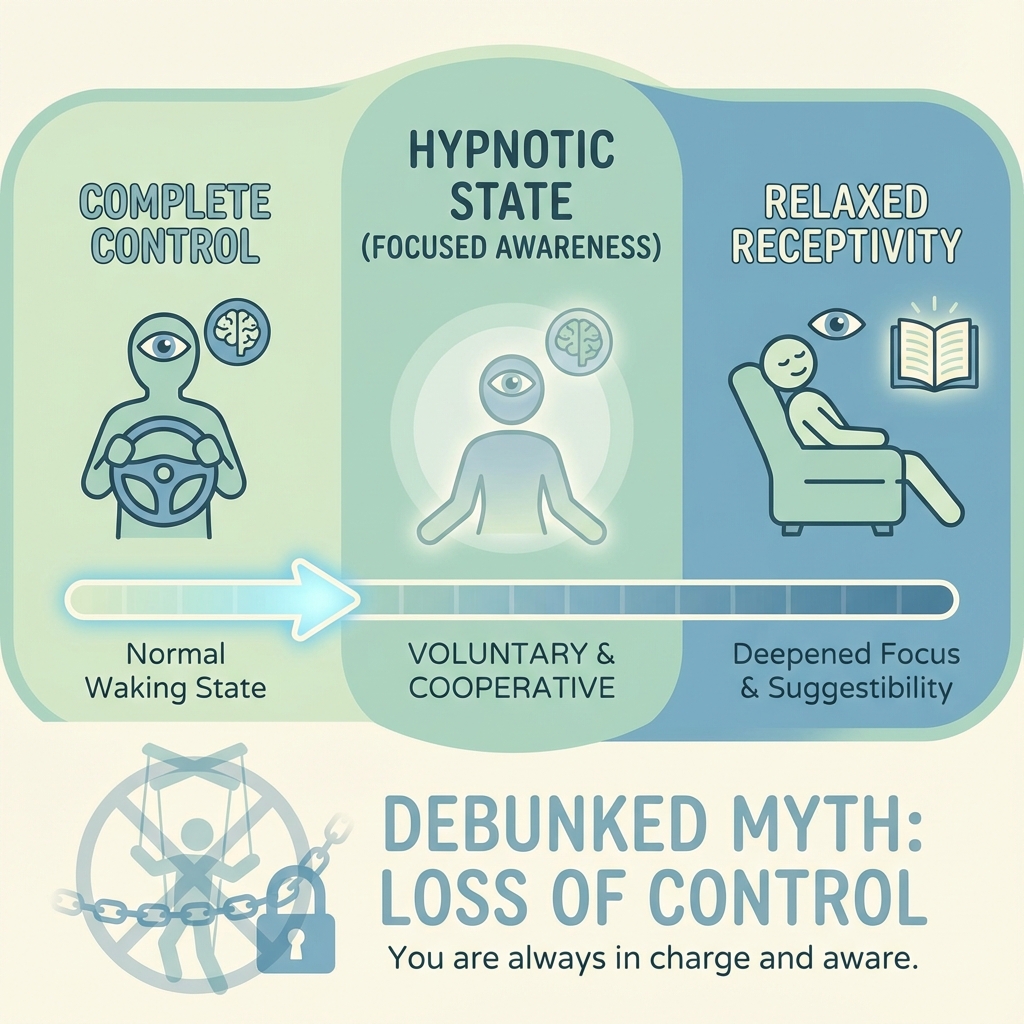
- A state where you lose all agency
Hypnosis is:
- A state of focused attention and relaxation
- Heightened suggestibility (you’re more open to ideas)
- Completely voluntary (you can exit at any time)
- Something your brain already does naturally
Have you ever been so absorbed in a book or film that you lost track of time? Or driven somewhere familiar and arrived without consciously remembering the journey? Those are light hypnotic states. Your conscious mind steps back, and your subconscious takes over routine tasks.
Therapeutic hypnosis deliberately cultivates this state and uses it constructively — to reinforce positive thoughts, rehearse difficult situations, or weaken unhelpful mental patterns.
At no point do you lose control. You can open your eyes, speak, move, or end the session whenever you want. The hypnotist (or in this case, the AI) is a guide, not a controller.
What makes AI hypnosis different from traditional hypnotherapy
In traditional hypnotherapy, you work with a trained human practitioner. They guide you into a relaxed state, offer suggestions tailored to your goals, and help you work through specific issues.
AI hypnosis follows a similar structure, but with some key differences:
Personalisation through conversation. Before each session, you share context — what you’re working on, how you’re feeling, what you hope to achieve. The AI doesn’t just pick a pre-made script; it creates a session specifically for your situation.
Consistency of approach. A human hypnotherapist might have good days and off days. AI delivery is consistent. Every session follows established hypnotherapy principles without deviation.
Accessibility. Traditional hypnotherapy can cost £50-150+ per session and requires scheduling appointments. AI hypnosis is available whenever you need it, often for a fraction of the cost or free.
Privacy. Some people feel uncomfortable sharing deeply personal goals with a stranger. With AI, there’s no judgement, no social awkwardness, no one to face afterwards.
However, AI hypnosis also has limitations:
It can’t read your body language. A skilled human therapist might notice tension you haven’t mentioned, or adjust their approach based on subtle cues. AI works only from what you explicitly share.
It can’t handle complex trauma. For deep psychological work — processing trauma, addressing severe mental health conditions — human expertise is essential. AI hypnosis is designed for personal development and self-improvement, not clinical treatment.
The safeguards built into AI hypnosis
Responsible AI hypnosis platforms build in safeguards. Here’s what we do at InTheMoment:
1. Established techniques only
The AI doesn’t invent hypnosis techniques. It draws from established hypnotherapy methods: progressive relaxation, visualisation, positive suggestion, mental rehearsal. These are techniques used by professional hypnotherapists worldwide.
This prevents the AI from going “off-script” in unpredictable ways. Every suggestion, every technique, has precedent in therapeutic practice.
2. Gentle, permissive language
Hypnotherapy scripts generally use two types of language: authoritative (“You WILL feel calm”) or permissive (“You might notice a feeling of calm”). AI hypnosis uses permissive language throughout.
Every suggestion is framed as an invitation, not a command. “Perhaps you can imagine…” “You might allow yourself to feel…” This respects your autonomy and ensures you never feel coerced.
3. Control remains with you
At any point during a session, you can open your eyes, pause the audio, or end entirely. You’re never “locked in.” Hypnosis requires your willing participation; without it, the process doesn’t work.
The sessions also remind you of this. You might hear phrases like “You remain in complete control” or “You can return to full alertness at any time.” This isn’t just for safety — it’s necessary for hypnosis to work effectively.
4. Appropriate scope
AI hypnosis at InTheMoment focuses on goals that are suitable for self-practice: building confidence, improving sleep, managing stress, preparing for challenges, developing habits.
It does not attempt to treat clinical conditions like PTSD, complex phobias, or severe anxiety disorders. These require professional diagnosis and tailored treatment from qualified practitioners.
Who should be cautious
While AI hypnosis is safe for most people, some individuals should approach it carefully or avoid it:
People with certain mental health conditions. If you have psychosis, severe depression, dissociative disorders, or epilepsy, consult a healthcare professional before trying any form of hypnosis. This applies to AI hypnosis, human hypnotherapy, and even deep meditation.
Those with trauma they haven’t processed. Hypnosis can sometimes bring up unexpected emotions or memories. If you’re carrying significant unprocessed trauma, working with a trained therapist is a safer choice than self-practising with AI.
Anyone under the influence. Don’t use hypnosis when drunk or otherwise impaired. The relaxation techniques are powerful, and you should approach them clear-headed.
People who don’t want to be hypnotised. This might sound obvious, but hypnosis doesn’t work well on unwilling participants. If you’re sceptical or resistant, the techniques won’t be very effective anyway. You might as well save your time.
If none of these apply to you, AI hypnosis is generally considered safe for personal development purposes.
Common safety concerns addressed
“Will I be stuck in hypnosis?”
No. You cannot get “stuck” in a hypnotic state. At worst, if you fell asleep during a session (which can happen — it’s relaxing), you’d simply wake up naturally. The session never takes you anywhere you can’t easily return from.
“Will I do something I don’t want to do?”
No. Hypnosis cannot make you act against your values or will. Stage hypnosis creates a misleading impression — those participants are volunteers who want to perform and are playing along. Therapeutic hypnosis is entirely different. You remain in control and can reject any suggestion that doesn’t feel right.
“Will I remember what happened?”
Yes. Unlike popular misconceptions, hypnosis doesn’t create blackout amnesia. You’ll be aware of what’s being said and what you’re experiencing. You might feel the memory is slightly dreamy or diffuse — similar to remembering a daydream — but you won’t forget the session.
“Can AI say something harmful?”
This is a legitimate concern with any AI system. At InTheMoment, we address it through two safeguards:
First, the AI draws only from established hypnotherapy techniques. It doesn’t freestyle or generate novel approaches.
Second, all suggestions are positive and permissive. The system is not structured to introduce negative suggestions, shame, or harmful content.
Could a badly designed AI hypnosis system cause harm? Potentially. Which is why platform choice matters. Look for services that are transparent about their methods and whose content is grounded in established practice.
The actual experience of an AI hypnosis session
If you’ve never tried hypnosis, you might be curious (or worried) about what actually happens. Here’s a typical session:
The opening (5-10 minutes). The session guides you into a relaxed state through progressive relaxation. You might tense and release muscle groups, focus on your breathing, or visualise descending stairs or walking along a beach. The pace is slow and calm.
The body (10-20 minutes, depending on session length). Once relaxed, the session focuses on your specific goal. For example:
Building confidence for a presentation: You might visualise walking into the room, feeling calm and prepared, delivering your points clearly, noticing the engaged expressions of your audience.
Improving sleep: You might imagine a switch that dims your racing thoughts, or a feeling of heaviness and warmth spreading through your body.
Breaking a habit: You might visualise your future self, free from the habit, noticing how that feels, and rehearsing the choices that lead there.
The language is suggestive but never commanding. Your mind accepts what resonates and naturally filters what doesn’t.
The closing (2-3 minutes). The session gently brings you back to full alertness. You might be guided to become aware of your surroundings, take a few deeper breaths, and open your eyes when ready. You won’t feel groggy or disoriented — most people describe feeling refreshed, like waking from a good nap.
Why I trust AI hypnosis (personally)
I’ll be honest: I was sceptical too. Hypnosis felt like something between therapy and magic tricks, and I wasn’t sure where AI fit into either.
But after using it consistently — particularly for confidence before difficult conversations and for sleep when my mind wouldn’t quiet — I’ve come to find it genuinely useful.
The personalisation is what makes it work. When a session knows I’m anxious about a specific meeting with a specific person, and guides me through imagining that conversation going well, it feels more relevant than a generic “boost your confidence” recording ever could.
And the safety? I’ve never felt out of control. I’ve never experienced anything strange or distressing. It’s just deep relaxation and focused imagination. The same mental faculties I use when reading fiction or daydreaming, just channelled deliberately toward something I’m trying to achieve.
The bottom line
AI hypnosis, when implemented responsibly, is safe for most adults pursuing personal development goals.
It’s not magic. It’s not mind control. It’s a guided relaxation practice that uses your imagination to rehearse positive outcomes and reinforce helpful patterns.
The risks are minimal when the platform follows established techniques, uses permissive language, and stays within appropriate scope.
If you’re curious, the only way to really know if it’s for you is to try it. Start with something low-stakes — maybe improving focus or relaxation — and see how your mind responds to the practice.
At worst, you’ll have spent 15 minutes relaxing. At best, you might discover a tool that helps you prepare for challenges, build confidence, and sleep better.
That seems like a worthwhile experiment.
Before choosing a tool, compare the best AI hypnosis apps and pay attention to whether each app explains its safety boundaries clearly.
Ready to try AI hypnosis for yourself? Get started with two free sessions per day — no credit card, no commitment.