Hypnosis has an image problem.
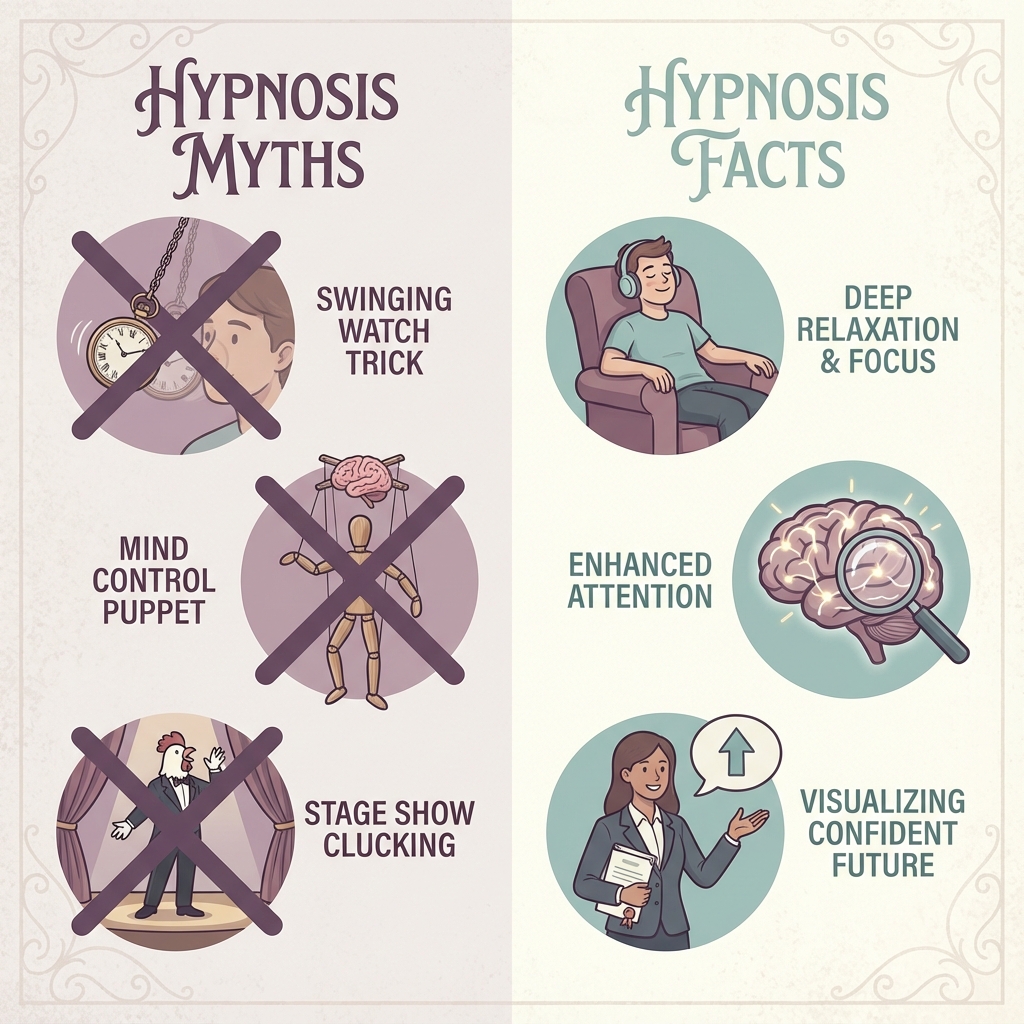
Say the word and people picture swinging watches, mind control, making people cluck like chickens on stage shows. Decades of theatrical entertainment have obscured something genuinely useful.
Add “AI” to hypnosis and it sounds even stranger. Robot mind control? What does that even mean?
Let me demystify this. AI hypnosis is real, it’s useful, and it’s nothing like what you might imagine.
What hypnosis actually is
First, hypnosis in general.
Hypnosis is a state of focused attention and heightened suggestibility. It’s not sleep. It’s not unconsciousness. It’s not mind control.
You’ve experienced hypnotic states naturally. Getting so absorbed in a book that you don’t hear someone calling your name. Driving a familiar route on autopilot while your mind wanders elsewhere. Being so focused on a task that time seems to vanish.
These are light trance states — moments when your conscious, critical mind steps back and your mind operates more fluidly.
Therapeutic hypnosis deliberately cultivates this state, then uses it constructively. While you’re in a relaxed, focused state, you’re more open to suggestions that can help change patterns, build skills, or shift perspectives.
What AI hypnosis adds
Traditional hypnotherapy involves a trained practitioner guiding you through the process. They talk with you about your goals, create a session tailored to your needs, and guide you through it in person.
AI hypnosis follows the same structure, but with technology:
Pre-session check-in. You share your goals and current situation through a brief conversation. What are you working on? What’s getting in the way? What do you want to feel or achieve?
Personalised script generation. Based on your check-in, the AI creates a hypnosis script tailored to your specific situation. Not a generic recording — something created for you, right now. Learn more about how personalised hypnosis scripts work.
Guided delivery. You listen to the session, which guides you into relaxation and delivers suggestions relevant to your goals.
Feedback integration. After the session, you can share what worked and what didn’t. This feedback improves future sessions.
The underlying technique is the same as traditional hypnotherapy. What changes is the delivery — personalised to your situation, available whenever you want, without scheduling or cost barriers.
What an AI hypnosis session feels like
If you’ve never experienced hypnosis, you might wonder what to expect.
The beginning is relaxation. You’ll be guided to settle your body and calm your mind. Progressive muscle relaxation, focused breathing, visualisation of peaceful places. This takes 5-10 minutes typically.
As you relax more deeply, you’ll likely notice a shift. The outside world feels further away. Your body might feel heavy, or perhaps light and floating. Your sense of time might change.
The middle involves the actual therapeutic work. This might include:
- Visualising yourself in challenging situations, feeling confident and capable
- Mental rehearsal of desired behaviours
- Reframing how you think about certain things
- Suggestions for new patterns of thought or behaviour
The content depends on your goals. Someone working on public speaking anxiety might visualise themselves on stage, calm and engaging. Someone working on sleep might experience deepening relaxation and mentally rehearse falling asleep easily.
The ending gently brings you back to full alertness. You’ll be guided to become aware of your surroundings, take some deeper breaths, and open your eyes when ready.
You’ll remember everything. You might feel like you’ve been daydreaming or resting deeply. Most people feel refreshed and calm afterwards.
What AI hypnosis can help with
AI hypnosis is particularly effective for:
Building confidence. Visualising yourself performing well, feeling capable, speaking up. Mental rehearsal trains your mind for actual performance.
Managing anxiety and stress. Calming the nervous system, reframing anxious thoughts, building relaxation skills.
Improving sleep. Developing healthy sleep patterns, relaxing before bed, quieting racing thoughts.
Breaking unwanted habits. Shifting automatic patterns, strengthening motivation, visualising life without the habit.
Enhancing focus and performance. Like athletes using mental training, hypnosis helps you prepare mentally for challenging work.
Overcoming fears and phobias. Gradually reframing fear responses, building comfort with previously scary situations.
How AI personalisation helps
Generic hypnosis recordings can help, but they miss the nuance of your specific situation.
Consider someone worried about a job interview:
- Generic recording: “You will feel confident in professional settings.”
- AI hypnosis: Knows the specific interview is tomorrow morning, it’s for a marketing role at a startup, the person is most worried about the technical questions.
The AI session can address the actual situation, visualise the actual interview room, prepare for the actual concerns.
This specificity matters because hypnosis works through imagination and suggestion. The more vividly and specifically you can imagine something, the more powerfully it affects your subconscious.
The difference from meditation
Both meditation and hypnosis involve relaxation and focused attention. But they serve different purposes:
Meditation focuses on the present moment. Observing thoughts without getting caught up in them. Awareness of breath, body, environment. The goal is presence and acceptance.
Hypnosis focuses on change. Visualising desired outcomes. Rehearsing new behaviours. Planting suggestions for different patterns. The goal is influence over subconscious processes.
Another way to think about it:
- Meditation helps you observe and accept your mind
- Hypnosis helps you reshape how your mind responds
At InTheMoment, we offer both. Many users find them complementary — meditation for daily maintenance, hypnosis for specific goals or challenges.
Is AI hypnosis safe?
Yes, for most people.
Hypnosis is a natural state. You can’t get “stuck” in it. You can’t be made to do something against your will. You remain aware and in control throughout.
AI hypnosis uses established hypnotherapy techniques. The same methods used by professional hypnotherapists for decades.
Some people should approach with caution:
- Those with psychosis or severe mental health conditions
- Those with significant unprocessed trauma
- Those with certain neurological conditions
If you fall into these categories, consult a healthcare professional before using hypnosis of any kind.
For everyone else, AI hypnosis is a low-risk tool with genuine potential benefits.
The technology question
“Does it matter that it’s AI?”
The voice you hear in AI hypnosis is generated by artificial intelligence. Modern AI voices are remarkably natural — most people can’t distinguish them from recordings.
The script is generated based on your check-in, drawing from established hypnotherapy techniques. It’s not making things up — it’s selecting and applying proven methods.
What you’re getting is essentially a hypnotherapy session customised for your situation, delivered through technology rather than by a person sitting in the room.
Some people prefer human connection. That’s valid. Traditional hypnotherapy has value.
But AI hypnosis offers something that wasn’t possible before: personalised hypnotherapy available on demand, at any time, without scheduling or prohibitive costs.
If you are deciding which app to try, the best AI hypnosis apps comparison separates true generated sessions from apps that mainly recommend pre-recorded tracks.
Getting started
If you’re curious, here’s how to approach your first AI hypnosis session:
Choose a quiet time. You’ll need 20-30 minutes without interruption. Hypnosis requires focus.
Set a clear goal. What are you hoping to work on? Be specific in your check-in. “Build confidence for my presentation next week” is better than “feel more confident.”
Let go of expectations. You don’t need to achieve some dramatic altered state. Light relaxation with focused attention is enough for hypnosis to work.
Use headphones. Audio quality matters for relaxation. Good headphones help you immerse in the experience.
Give it more than one try. Some people respond immediately; others need a few sessions to fully relax into the process. Don’t judge hypnosis by a single session.
The bottom line
AI hypnosis is not mind control. It’s not mystical. It’s not about losing yourself.
It’s a guided relaxation practice that uses your imagination to rehearse new patterns and plant suggestions for change.
The AI element means it’s personalised to your situation, adapts to your feedback, and is available whenever you need it.
For goals like building confidence, managing stress, improving sleep, and changing habits — it’s a remarkably accessible tool.
The theatrical associations with hypnosis are unfortunate. Beneath them is something genuinely useful.
Worth trying. Worth understanding. Worth having in your personal development toolkit.
Ready to try AI hypnosis yourself? Get started with two free sessions per day — no credit card required.